
.svg)






What should you know before buying a villa in Goa?
Villas in Goa are one of India's strongest real estate investments in 2026. North Goa, especially Anjuna and Assagao, leads in demand, rental yield, and capital appreciation.
Buyers can choose from luxury villas, gated community villas, private pool villas, and ready-to-move options. Legal checks, including RERA registration, title verification, and CRZ compliance, are essential before any purchase. NRIs can buy freely through NRE or NRO accounts.
Rental yields in prime North Goa locations range from 8 to 12% annually. For buyers who want a second home, a rental asset, or a long-term investment, Goa villas in 2026 offer value that few other Indian property markets can match.
Introduction
Goa attracts more than one crore tourists every year. A large and growing portion of those visitors come back, not as tourists, but as buyers.
Villas in Goa are no longer just holiday properties. They are second homes, rental assets, long-term investments, and in many cases, full-time residences. The profile of who is buying villas in Goa has changed. Today's buyers are NRIs, senior executives, startup founders, creative professionals, and HNI families who want a premium home in one of India's most desirable destinations.
If you are considering buying a villa in Goa in 2026, this guide covers everything you need to know. From the best locations and property types to the legal steps and the smartest investment decisions, read this before you take any other step.
What Is a Villa?
A villa is a large, private residential home. It sits on its own plot of land and comes with outdoor space, usually a garden, terrace, or private pool.
Unlike an apartment or flat, a villa is a standalone structure. You own the building and the land it sits on. There are no shared walls with neighbors. No common corridors. No stacked floors above or below you.
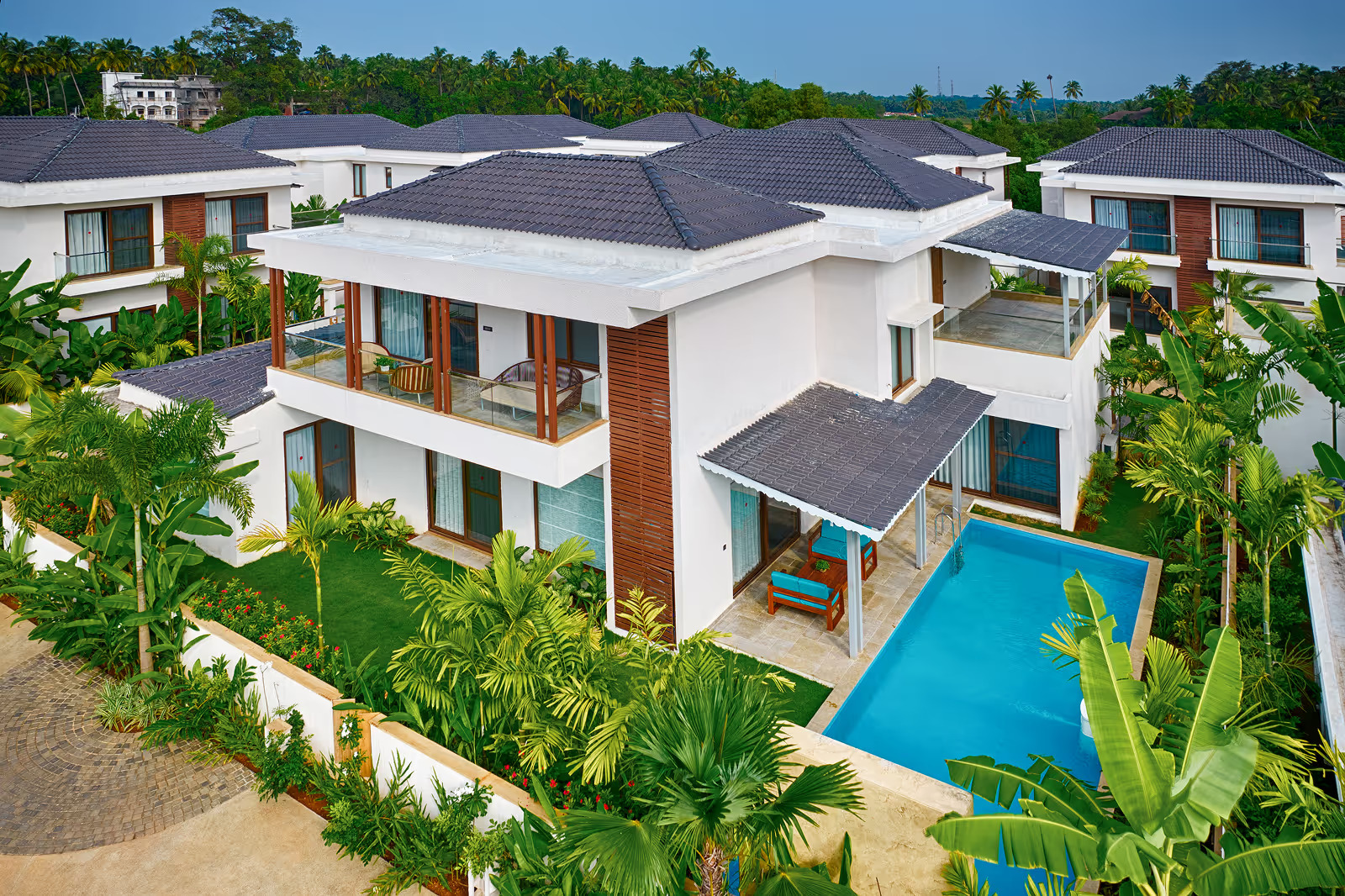
In Goa, villas typically come with a private pool, landscaped outdoor areas, multiple bedrooms, and a design that reflects the local architecture: Balinese, Indo-Portuguese, contemporary, or a mix. They range from three-bedroom homes for small families to large five-bedroom properties built for premium living and high-end rental guests.
A villa in Goa is not just a house. It is a lifestyle choice, an income asset, and, in the right location, one of the strongest property investments in India.
Why Villas in Goa Are in High Demand in 2026
Several factors are driving demand for villas in Goa at the same time.
Remote work has changed where people live. Thousands of professionals can now work from anywhere with a laptop and a reliable internet connection. Goa, with its beaches, clean air, and co-working spaces, has become their first choice. Many rent first and then buy.
Tourism is at an all-time high. Goa crossed one crore tourist arrivals in 2025. More tourists means more demand for villa rentals. More rental demand means higher returns for villa owners. Buyers have noticed this and are acting on it.
Land in Goa is limited. Coastal Regulation Zone rules, heritage zoning, and the state's geography mean that new supply is genuinely constrained. In North Goa's most sought-after villages, the amount of land available for new development is shrinking every year. Limited supply and rising demand are a combination that drives prices upward over time.
Metro city fatigue is real. Buyers in Mumbai, Bengaluru, Delhi, and Hyderabad are increasingly choosing to put their money into a Goa villa rather than another flat in a congested city. The lifestyle difference is dramatic. The investment logic is equally strong.
Types of Villas in Goa
Understanding the types of villas available in Goa helps you find the right fit for your goals.
Luxury Villas in Goa
Luxury villas in Goa are fully designed, high-specification homes. They typically include a private pool, landscaped garden, premium interior finishes, and smart home features. These properties are built for buyers who want the highest quality of daily living.
Luxury villas for sale in Goa are concentrated in North Goa, especially in Anjuna, Assagao, Arpora, and Siolim. They attract NRI buyers, HNI families, and buyers who plan to rent the property to premium guests during peak season.
Gated Community Villas in Goa
Gated community villas are the fastest-growing property category in Goa. These are villa developments managed by a developer or facility management company, offering 24-hour security, landscaped common areas, maintenance services, and a curated community of residents.
For buyers who want quality, security, and hassle-free ownership, gated community villas in Goa are the preferred choice. Developers like Ashray Developers have built some of North Goa's most respected gated villa communities.
Read More: Benefits of Gated Communities in Goa
Villas with Private Pool in Goa
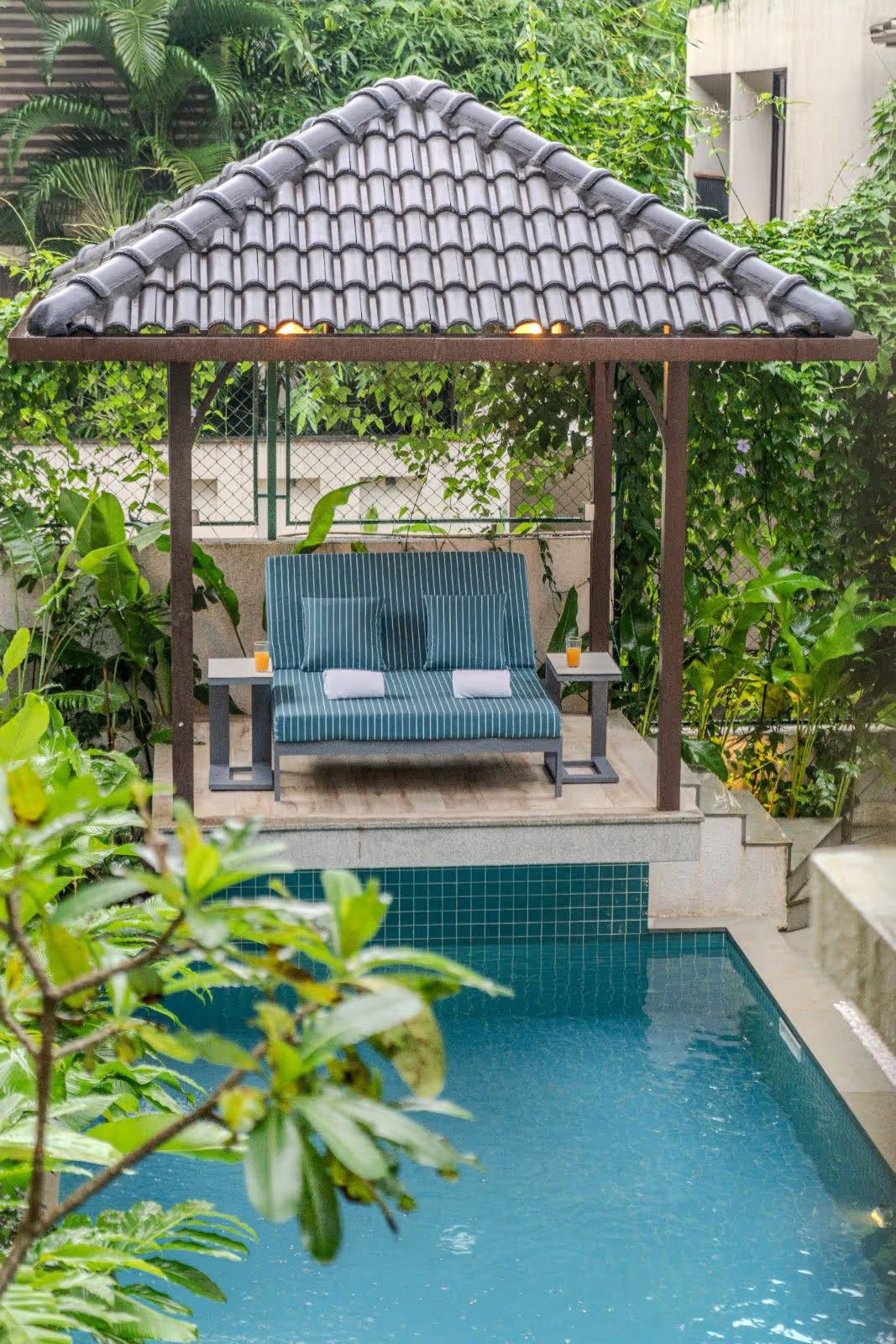
A private pool is one of the most in-demand features for both buyers and villa rental guests in Goa. Villas with private pools command the highest nightly rental rates and attract a consistent premium audience throughout the year.
For buyers focused on rental income, a villa with a private pool is not an optional luxury. It is a rental performance tool that directly impacts occupancy and returns.
Ready-to-Move Villas in Goa
Ready-to-move villas in Goa appeal to buyers who want immediate possession, zero construction risk, and the ability to start renting or living right away. These properties are already built, legally complete, and available for occupation. For buyers who value certainty, a ready-to-move villa is the safer and faster choice.
Under-Construction Villas in Goa
Under-construction villas are typically available at an earlier stage, with possession in 12 to 24 months. Buyers who enter early in a project get the benefit of booking at a lower price and watching the value grow as construction progresses. The trade-off is a wait period before income or occupation is possible.
Best Locations for Villas in Goa
Location is the most important decision in any Goa villa purchase. Here is a clear guide to the best areas.
North Goa Villas for Sale
North Goa is where demand is strongest, appreciation is highest, and rental yields are best. The following villages are the most sought-after.
Villas in Anjuna
Anjuna is North Goa's most active villa market. Beach proximity, year-round social energy, a large rental audience, and a well-established buyer community make Anjuna a top choice for both investors and lifestyle buyers. Villas in Anjuna hold their value well and rent consistently throughout the year, not just during peak season.
Villas in Assagao
Assagao is the preferred address for HNI buyers, NRIs, and creative professionals. The village has a curated community, boutique cafes, organic stores, and a quality of daily life that is rare in any Indian property market. Land supply in Assagao is extremely limited. Demand is growing. This makes Assagao the strongest long-term capital appreciation location in North Goa.
Siolim
Siolim sits on the Chapora River and offers a calmer, more residential lifestyle. It suits buyers who want more space, lower density, and proximity to Mopa International Airport. Families find Siolim particularly appealing. The area is gaining more developer attention and buyer interest as the Anjuna-Assagao belt becomes more expensive.
Candolim and Calangute
These are strong, established villa markets with consistent rental demand. Beach access is excellent. The communities are active year-round. Buyers who want reliable rental income from a well-known North Goa location often choose this belt.
South Goa Villas
South Goa offers a quieter, more private environment. Locations like Benaulim, Colva, and Palolem suit buyers who prioritize peace and natural surroundings over social activity. Appreciation in South Goa is slower than North Goa, but the lifestyle quality is excellent, and the setting is often more pristine.
For buyers focused on investment return and rental performance, North Goa leads. For buyers focused on quieter, more secluded living, South Goa is worth considering.
Is It Better to Buy a Ready or Under-Construction Villa in Goa?
This is one of the most common questions from villa buyers in 2026. Here is an honest answer.
Choose ready-to-move villas in Goa if:
- You want to start earning rental income immediately
- You want to see exactly what you are buying before paying
- You want zero risk of construction delays
- You need an occupation for personal use without a waiting period
Choose under-construction villas if:
- You are comfortable waiting 12 to 24 months for possession
- You want the benefit of an earlier-stage price
- You have time to watch the project develop and value grow
- You are buying purely as an investment and not for immediate personal use
Always verify RERA registration for any under-construction project before booking. RERA provides legal protection and delivery accountability.
Gated Community vs Standalone Villa in Goa
Gated community villas offer security, maintenance, shared amenities, and a professional management structure. For buyers who are not permanently resident in Goa, a gated community is the safer and more practical choice. The property is managed properly whether you are there or not. Guests arrive to a well-maintained home. Your investment is protected.
Standalone villas offer more privacy, more land, and more independence. For buyers who want to customize heavily or who plan to be permanent residents, a standalone villa can work well. The challenge is managing maintenance, security, and rental operations without the support of a developer's management structure.
For most buyers purchasing a villa in Goa as a second home or rental asset, a gated community villa is the more practical and value-preserving choice.
Read More: Gated Community vs Standalone Villa in Goa
Villa vs Apartment in Goa: Which Is the Better Buy?
Many buyers come to Goa considering both options. Here is a clear comparison to help you decide.
Choose a villa if you want privacy, a private pool, higher rental returns, and a premium lifestyle. A villa in North Goa is a genuinely different product from an apartment. It earns more, it feels more, and it holds its value better in Goa's most sought-after locations.
Choose an apartment if you are entering the Goa property market for the first time with a smaller budget, or if you want a lower-maintenance property in a managed society.
For buyers who are serious about Goa as a lifestyle destination or a rental investment, a villa is almost always the stronger long-term decision.
Luxury Villas in Goa: What Defines Real Quality
Not all properties called luxury villas in Goa deliver the same standard. Here is what to look for.
Construction quality: Look for high-specification materials, engineered wood, quality plumbing and electrical systems, and a strong foundation. Ask about the builder's track record and visit completed projects before buying.
Private pool: A well-designed, properly sized private pool is the single biggest upgrade a Goa villa can have. It affects both rental income and daily lifestyle quality.
Interior design and furnishing: Fully furnished and designed villas save months of work and significant expense. Check what is included and the quality of what is provided.
Property size and plot area: A larger plot gives you outdoor space, garden area, and privacy. Understand the built-up area versus the total plot area before making a decision.
Location within the village: Being on a quiet lane in Assagao is very different from being on a busy main road. Walk or drive the specific road before finalizing any purchase.
Developer reputation and RERA compliance: Only buy from developers with a proven track record, completed projects you can visit, and valid RERA registration.
Who Should Buy a Villa in Goa?
Second Home Buyers
Goa is India's top destination for second-home villas. Buyers from Mumbai, Bengaluru, Delhi, and Hyderabad buy here primarily as a lifestyle asset. They use the property during holidays and long weekends and rent it for the rest of the year. The rental income offsets ownership costs and often generates a surplus.
Read More: Benefits of Owning a Second Home in Goa
Investors Focused on Rental Income
Goa's rental market is one of the most active in India. A well-located luxury villa with a private pool can generate strong returns during peak season (October to March) and consistent income through the shoulder months. Year-round income is realistic with the right property in the right location.
Read More: How Much Can You Earn by Renting Out a Villa in Goa?
NRI Buyers
NRIs are one of the largest buyer groups in Goa's villa market. They buy for lifestyle, for income when they are abroad, and for a future return-to-India base. NRIs can purchase residential villas in Goa without RBI permission. Payments must go through NRE or NRO accounts. FEMA regulations apply.
For NRI buyers, a gated community villa with professional facility management is the most practical choice. The property is cared for and rented by a professional team while the owner is abroad.
Professionals Who Have Relocated to Goa
Thousands of IT professionals, freelancers, consultants, and startup founders have moved to Goa permanently. After renting for six to twelve months, many choose to buy. A villa purchase converts a monthly rental expense into an equity-building asset. It also gives the owner a home they can rent when they travel.
Villa Investment in Goa: What the Numbers Show
Buying a villa in Goa is one of India's strongest real estate investment decisions in 2026. Here is what the data shows.
Capital appreciation: Prime North Goa locations have delivered appreciation of 15 to 25% year-on-year in recent years. Assagao, in particular, has seen appreciation of over 130% in three years across the premium villa segment.
Rental yields: Annual rental yields for luxury villas in North Goa range from 8 to 12% in the best locations. South Goa delivers 6 to 8%.
Occupancy rates: Peak season (October to March) sees the highest demand. Well-managed, well-located villas with private pools achieve occupancy of 70 to 85% during this period. Shoulder season (April to May) and the monsoon period add additional income for properties in high-demand villages like Anjuna and Assagao.
Land scarcity: New land supply in North Goa's most desirable villages is genuinely limited. This structural scarcity supports long-term value growth in a way that apartment markets in other Indian cities cannot replicate.
Tourism growth: Goa recorded over 1.08 crore tourist arrivals in 2025. More arrivals mean more rental demand, more occupancy, and more income potential for villa owners.
Owning a Villa in Goa Through the Seasons
Goa has four distinct seasons. Each one affects your villa differently, whether you are using it personally or renting it out. Understanding the seasonal rhythm before you buy is important.
Peak Season: October to March
This is when Goa is at its most active. Tourists arrive in large numbers. Demand for villa rentals is at its highest. Nightly rates climb, and occupancy stays strong. If your villa is well-located and well-presented, peak season is your primary income window.
For personal use, this is Goa at its best: dry weather, clear skies, cool evenings, and a fully alive social and dining scene. Many second-home owners visit during December and January.
Shoulder Season: April and May
The heat increases and crowds thin out. Serious tourists still visit. Longer-stay guests, digital nomads, and remote workers are the dominant rental audience during this period. Occupancy drops from peak levels but does not disappear entirely in strong locations like Anjuna and Assagao.
Many villa owners use April and May for maintenance work before the monsoon arrives.
Monsoon: June to September
The monsoon is Goa's off-season for tourism, but it is not dead. Goa in the monsoon is green, lush, and quiet. Long-term residents love this period. A growing number of wellness travellers and slow-travel guests specifically choose the monsoon for its calm.
For villa owners, the monsoon requires attention. High humidity, heavy rainfall, and vegetation growth mean that maintenance is essential. A well-built villa, properly sealed and ventilated, handles the monsoon well. Cheap construction suffers.
Key monsoon tasks for villa owners:
- Check and clear roof drainage and gutters before June
- Service the pool and cover it if it will not be used
- Treat wood and furniture for humidity
- Ensure electrical fittings and outdoor lighting are weatherproofed
- Arrange for regular inspection if you are not in Goa during this period
For gated community villa owners, facility management teams handle most of this. For standalone villa owners, a trusted local caretaker is essential.
Rental income during the monsoon is lower, but some Goa villa owners find a strong market among work-from-anywhere guests who prefer the quiet, affordable, and beautiful monsoon version of Goa.
Post-Monsoon: October
October is when Goa wakes up. Guests start arriving from mid-October onward. Villas are freshened up, restaurants reopen, and the season begins again. For owners, this month is about preparing the property for peak season: deep cleaning, maintenance checks, and listing updates on rental platforms.
Owning a Goa villa successfully means working with the seasons, not against them. Buyers who understand the seasonal rhythm make better decisions about property management, rental strategy, and personal use scheduling.
Step-by-Step Guide: How to Buy a Villa in Goa
Step 1: Define Your Goal
Are you buying for personal use, rental income, long-term investment, or all three? Your goal determines the type of villa, the location, and whether a gated community or standalone property makes more sense for you.
Step 2: Choose Your Location
Research the villages and neighborhoods that match your lifestyle and investment goals. Anjuna and Assagao lead for rental income and capital growth. Siolim suits those seeking calm and space. Candolim and Calangute are proven rental markets with good infrastructure.
Step 3: Set Your Budget
Factor in not just the property price but also stamp duty (typically 3 to 5% in Goa), registration fees, GST on under-construction properties, legal fees, and any furnishing or setup costs. Total additional costs over the base price typically run between 7 and 12%.
Step 4: Research Developers
Visit completed projects. Check RERA registration. Ask for delivery timelines on ongoing projects. A developer's track record is the most reliable indicator of quality and reliability.
Step 5: Legal Due Diligence
This step is non-negotiable. Engage a local property lawyer and check the following:
- Title certificate: Verify clear and marketable title with no disputes
- RERA registration: Mandatory for all ongoing projects
- CRZ compliance: Coastal Regulation Zone rules govern construction near the coast
- Land classification: Verify the land is classified for residential use (not agricultural or forest land)
- Occupancy certificate: For ready-to-move properties, ensure this is in place
- Encumbrance certificate: Confirms the property is free of loans or legal claims
- Building plan approval: Confirm the approved plan matches what is built
Step 6: Sign the Agreement and Register
Once due diligence is complete, sign the sale agreement. Pay stamp duty and register the property with the relevant Sub-Registrar office. This step gives you legal ownership of the villa.
Step 7: Set Up Management
If you are not permanently resident in Goa, set up a property management arrangement. Many developer-managed communities include this as part of their offering. For standalone villas, appoint a trusted local property manager.
Is Buying a Villa in Goa a Good Investment in 2026?
Yes. Here is why.
Goa is India's top tourist destination. Tourism numbers are at record levels and growing. The professional migration to Goa is adding year-round rental demand from a high-quality tenant base. Land supply in North Goa is limited and getting more so every year.
The combination of rising demand, limited supply, strong rental income potential, and a lifestyle that continues to attract buyers from India's wealthiest demographics makes Goa villa investment one of the most solid property decisions in the country in 2026.
Buyers who entered the Assagao and Anjuna markets in 2022 to 2023 have seen exceptional returns. The conditions that drove those returns have not changed. They have, in many respects, strengthened.
Which Area Is Best for Buying a Villa in Goa?
The honest answer depends on your goal.
For maximum rental income: Anjuna is the best choice. Year-round demand, beach proximity, and a proven rental market make it Goa's strongest performer for investors focused on annual yield.
For long-term capital appreciation: Assagao leads. Land supply is the most constrained. Buyer demand is the most premium. Appreciation over the past three years has outperformed every other North Goa village.
For a quieter, family-oriented lifestyle: Siolim or South Goa. Lower density, more space, and a calmer environment make these the best fit for families and permanent residents.
For the best of both: The Arpora-Anjuna corridor gives you access to Anjuna's rental market while sitting slightly inland with a less crowded character.
Ashray Developers: Villas for Sale in Goa
Ashray Developers has 24-plus completed and ongoing projects across North Goa. Every project is RERA-registered and built to a consistent quality standard that buyers from India's most discerning cities expect.
Serenity Villa in Anjuna, Goa
Serenity is a ready-to-move, 4 BHK, and fully furnished villa in Anjuna, Goa. Balinese design. Private pool. Gated community of 10 villas. One of Anjuna's most complete ready-to-move villa options.
Mayberry Phase 2 Villa in Anjuna
The Mayberry Phase 2 is an ongoing 4 BHK, fully furnished villa in Goa. Indo-Portuguese design. Private pool and landscaped courtyard. A strong choice for buyers who want a ready-to-live-in villa from a proven developer.
Mayberry Phase 1 in Arpora-Anjuna Road
The Mayberry Phase 2 is a 4-BHK and 5-BHK Balinese-design villa in Arpora-Anjuna Road, Goa. 24-hour facility management. An established community with a proven track record.
Estelliiaa in Arpora-Anjuna Road
Estelliiaa is ongoing, 4 and 5 BHK, valley views with a private pool Villa in Arpora-Anjuna Road, Goa. Best for buyers who want scale, views, and a premium address between Arpora and Anjuna.
Estrella Villa Arpora-Anjuna Road
Estrella is a standalone 4 BHK villa in Goa. Large plot. Possession 2026. For buyers who want a standalone property with full independence and a high-specification finish.
Chrysalis Phase 2 Villa in Nerul, Goa
Chrysalis Phase 2 is 3 and 4 BHK villas plus 4 BHK apartments in Nerul, Goa. Paddy field views. Minimalist design. A strong option for buyers who want a calmer, village-adjacent location.
Aquarella Villa in Candolim-Saipem
Aquarella Villa is a 4 BHK standalone villa. Large plot near the Nerul River and Hilton Goa Resort. Candolim location with excellent beach access.
Conclusion
Villas in Goa are one of the best property investments you can make in India in 2026.
The market has strong fundamentals: limited land, growing tourism, increasing professional migration, and a buyer base that gets more premium every year. Whether you want rental income, capital growth, a second home, or all three, a well-chosen Goa villa delivers.
Choose the right location for your goals. Do thorough legal due diligence. Buy from a developer with a proven track record and RERA registration. And if possible, get advice from someone who knows the Goa market deeply.
Ashray Developers has built some of North Goa's most respected villa communities. The team can help you find the right villa for your goals, your timeline, and your lifestyle.
FAQs
1. Is buying a villa in Goa a good investment in 2026?
Yes. Goa's villa market has strong fundamentals: record tourist arrivals, limited land supply, growing professional migration, and rental yields of 8 to 12% in North Goa's best locations. Capital appreciation in prime North Goa villages has outperformed most Indian property markets over the past three years. Buyers who choose the right location and the right developer are making a well-supported long-term decision.
2. Which area is best for buying a villa in Goa?
For rental income and investment, Anjuna leads. For lifestyle and long-term capital appreciation, Assagao is the top choice. For a quieter, family-friendly setting, Siolim and South Goa work well. For buyers who want both rental performance and lifestyle quality, the Arpora-Anjuna corridor offers a strong balance.
3. Is it better to buy a ready-to-move or under-construction villa in Goa?
Ready-to-move villas let you start earning rental income immediately, with no construction risk and full visibility of what you are buying. Under-construction villas offer earlier-stage pricing and value growth as the project develops. For buyers who need immediate income or personal use, ready-to-move; it is better. For patient investors, under-construction with a reputed developer and RERA registration is a strong option.
4. Can NRIs buy villas in Goa?
Yes. NRIs can buy residential villas in Goa without RBI permission. Payments must be made through NRE or NRO accounts. FEMA regulations apply. Always verify RERA registration and complete a full title and legal check before purchasing. Gated community villas with professional management are the most practical choice for NRI buyers who are not permanently resident in Goa.
5. What are the additional costs when buying a villa in Goa?
Beyond the villa price, buyers should account for stamp duty (typically 3 to 5% of the property value), registration fees, GST on under-construction properties, legal and due diligence fees, and interior or furnishing costs if the property is unfurnished. In total, additional costs typically range from 7 to 12% above the base property price. Budget for these from the start to avoid surprises.