







Villa vs independent house in Goa is a choice between convenience and freedom.
A villa is a stand-alone home inside a planned project, usually a gated community built by a developer. It comes with shared security, shared upkeep, and often a private pool. An independent house is a stand-alone home on its own plot, outside any planned project. You own it, maintain it, and secure it yourself.
In Goa, the main differences are:
- Setting. Villas sit in gated communities. Independent houses sit anywhere, often in old villages.
- Upkeep. A villa community handles common areas. An independent house leaves everything to you.
- Paperwork. A new villa falls under RERA. A resale independent house needs deep title checks.
- Freedom. An independent house gives you more design freedom. A villa gives you more convenience.
For rental income, retirement, or a second home you will often leave empty, a villa is usually easier to own. For design freedom and land, an independent house can suit you better.
Buyers in Goa often ask whether to buy a villa or an independent house. Both are stand-alone homes, so they look alike on paper. Listings place independent houses for sale in Goa right beside villas, often with little explanation.
This guide explains villa vs independent house in Goa in plain words.
What Is a Villa?
A villa is a stand-alone, single-family home. It has its own walls, entrance, and usually its own garden. No other home shares its roof or walls.
In India, the word usually means more than that. A villa normally sits inside a planned residential project. A developer builds it, lays out the roads, and runs the common areas.
In Goa, a villa typically comes with:
- A gated community with security at the entrance
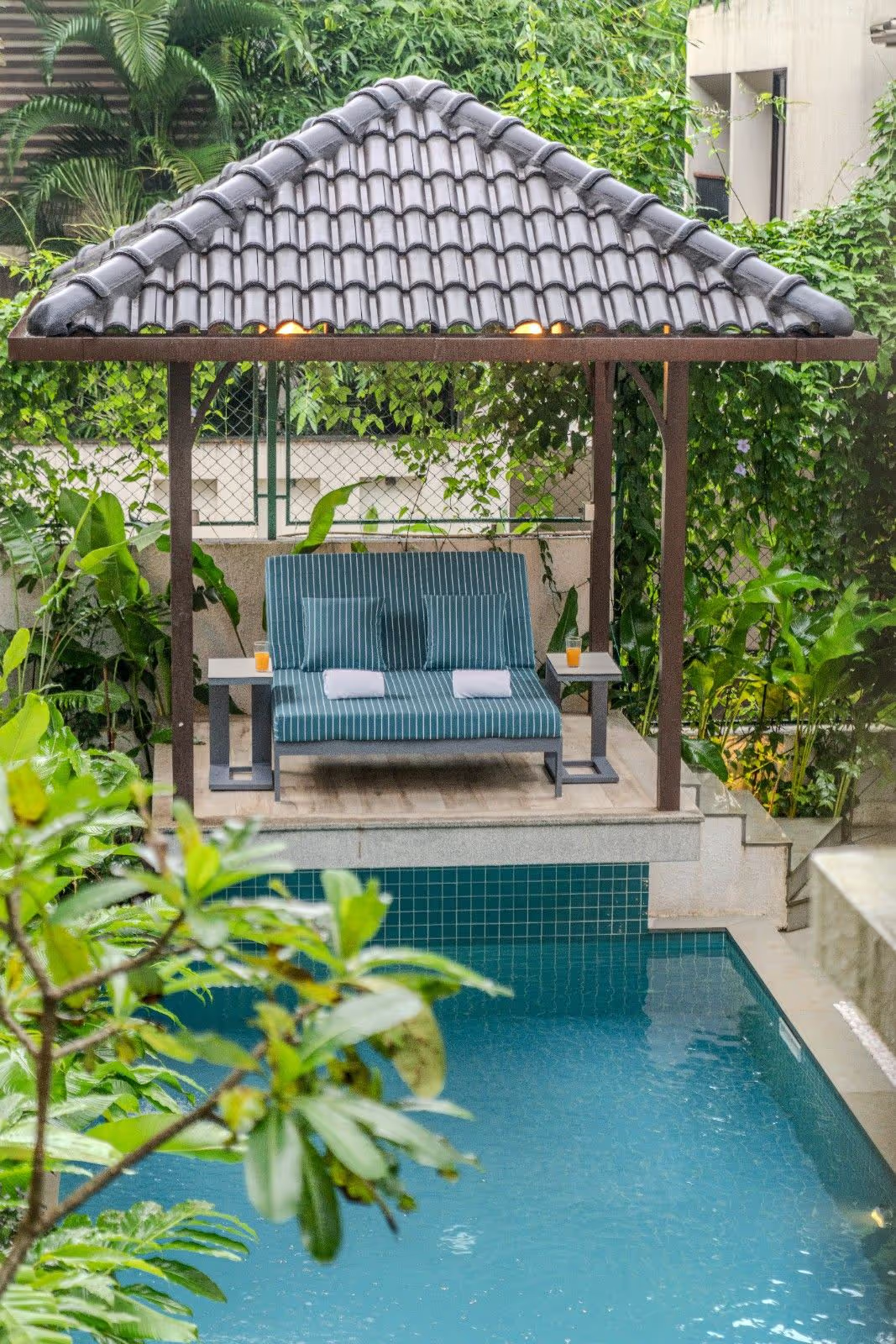
- A private pool, in most premium projects
- Landscaped grounds and shared roads
- Three to five bedrooms
- A set architectural style, such as Balinese or Indo-Portuguese
- Maintenance handled by a facility team
"Villa" is a market word, not a legal category. Two homes can look the same, and one may be sold as a villa and the other as a house. What matters is how and where it was built.
What Is an Independent House?
An independent house is a stand-alone home on its own plot of land. It is not part of a planned project. The owner holds the house and the land.
You may also hear it called an individual house, a stand-alone house, or a bungalow. They all point to the same idea: one family, one plot, no shared building.
In Goa, an independent house is often one of these:
- An ancestral or old family home in a village, sometimes in Portuguese-era style
- A house built by its owner on a plot they bought
- A resale home sold by the first owner
- A home between neighbours on a village lane
An independent house has no developer behind it. There is no common security, no shared pool, and no facility team. Everything is yours to arrange.
Villa vs Independent House: Key Differences
Here is the villa vs house comparison at a glance. Each row is explained in the sections that follow.
Other Terms People Mix Up
Home types overlap, and sellers use the words loosely. Here is a quick guide.
Villas and independent houses are the only two on this list that are fully stand-alone. That is why buyers compare them.
Villa vs Independent House: Which Is Better?
Privacy
Both give you more privacy than an apartment. But the kind of privacy differs.
In a villa, you get privacy from the public. The compound has a gate and a guard. Strangers do not walk past. Inside the community, though, neighbours are close. Good projects solve this with planting, wall height, and the angle of each home.
In an independent house, you get privacy from other owners, but not always from the street. A house on a village lane may have passers-by, noise, and open boundaries. A house at the end of a quiet road can feel completely private.
What to check on a visit: stand in the garden and the pool area. Look at what can see you. Check the neighbouring windows and the road.
For a home you will use as a quiet retreat, check privacy yourself rather than trusting the label.
Security and Safety
A villa community has controlled entry and usually CCTV. Guards cover the compound all day. This matters most if you leave the home empty for months.
An independent house needs its own plan. You may need a caretaker, alarms, cameras, and strong boundary walls. These cost money and need someone to manage them.
If you travel often or live abroad, shared security is a strong reason to choose a villa.
Maintenance and Running Costs
In a villa community, you pay a regular maintenance charge. It covers security, common grounds, shared roads, and often pool care. The charge is predictable, but you cannot change what it covers.
With an independent house, you pay for everything separately: the roof, the walls, the garden, the boundary, the pool if you add one, and any caretaker. Costs are not fixed. A large repair can arrive at any time.
Goa adds its own wear. Monsoon rain, humidity, and salt air are hard on buildings. Roofs, paint, wood, and fittings need regular care.
Ask for numbers. In a villa project, ask what the maintenance charge covers and how it changes. For an independent house, ask the owner what they spent on repairs in the last five years.
Private Swimming Pool and Amenities
Most premium villa projects in Goa give each home a private swimming pool. The developer designs the pool with the house, so the position, privacy, and approvals are planned from the start.
An independent house can have a pool too. But you must add it. That means design, approval, builders, and upkeep. A pool built without approval can cause trouble when you sell. A pool must appear on the approved building plan.
Villa communities may also have shared amenities. These can include landscaped grounds, a clubhouse, and facility management. An independent house has only what is on the plot.
For rental guests, a private pool matters a great deal. It is one of the first filters people use when they search.
Design Freedom and Customization
This is where an independent house wins.
With an independent house, you can choose the layout, the materials, the size, and the style. You can renovate, extend, or rebuild, subject to local rules and approvals.
With a villa, the design is set. The developer chooses the architecture, finishes, and layout. Community rules may limit changes to the outside, the boundary, or the colours.
Many buyers see this as a benefit. A well-designed villa gives you a finished home with no design effort. An independent house gives you a blank page, and the time, cost, and stress of a build.
Legal Paperwork: A Big Difference
This is the point most comparisons skip. It matters a lot.
Buying a Villa From a Developer
A new villa project that meets the size limits must be registered with RERA. In Goa, the registration appears on the RERA portal at rera.goa.gov.in. RERA gives you legal protection on timelines, approved plans, and carpet area.
You still need your own lawyer. Check title, land use, approvals, and the agreement. Also check whether you get a demarcated plot or an undivided share of the land.
Our guide on how to evaluate a real estate developer explains how to verify this.
Buying an Independent House
A resale house sits outside RERA. No regulator checks the seller. The whole burden of due diligence falls on you.
That means a full title search and a check of land records. It also means checking building approvals and any claims on the property. It takes time. It is also the most important step.
What Is Different in Goa: Title Risks in Older Homes
Goa has its own land and inheritance rules. They are why an old independent house can carry risks that a new villa does not.
Inheritance and Inventory Proceedings
Many old houses in Goa are family property. When an owner dies without a will, the estate is divided through a legal process called inventory proceedings. Some cases can use a declaration of inheritance instead.
The risk is an incomplete process. Even if the seller is one of several heirs, the title may not be clean.
Ask for:
- The full inventory order or declaration of heirship, not just a summary
- Proof that all heirs have joined the sale or consented
- A lawyer's opinion on the title
Land Records and Land Use
Check Form I and XIV. These are Goa's land records. It shows the owner, the land use, and any tenant or occupant entries. The name on it should match the seller.
Confirm the land is approved for residential use. Check the building licence and approved plans. Near the sea, a river, or a creek, check coastal clearance.
Renovating an Old House
Old Portuguese-style homes are charming. But a renovation may need approvals. Ask your architect and the local Panchayat what applies before you buy.
Villa vs Independent House Investment: Which Earns More?
For investment, the question is how each performs on rent, resale, and risk.
Rental Income
Villas suit rental income well. Guests like gated security, a private pool, and a finished home. Some projects offer rental management. You can earn while you are away.
Independent houses can earn too, especially in a strong location. But you need to arrange furnishing, cleaning, guest support, and listings yourself. A house with no pool and no managed security usually appeals to fewer guests.
Our guide on how much you can earn renting a Goa villa explains the details. If you rent to tourists, also check Goa's tourism registration rules.
Resale
Villas have a clear story. A new project, clean papers, and a known developer make a sale simpler. Buyers want a home they can use at once.
Independent houses are harder to sell if the title is complex. A clean house in a good lane can sell well. A house with an old inheritance problem can take years.
Land Value
An independent house usually sits on a larger piece of land that you own outright. In a good village, land is the part that holds value. A villa in a project may give you a smaller plot or a share of the land.
Risk
A new villa from a reputed developer carries delivery and quality risk, which you can check. An old independent house carries title risk, which you must check.
Overall: for most investors, a villa is simpler. Experienced buyers who can check title well may prefer an independent house. In a strong village, it can offer land value and freedom.
Which Is Better for Retirement: Independent House vs Villa?
Retirement changes what matters. Convenience and safety weigh more than design freedom.
A villa in a gated community often suits retirees. Security is shared. Common areas are cared for. You can lock up and travel. Some communities offer concierge or management services.
An independent house gives you space, a garden, and the freedom to modify the home. But you handle repairs, security, and staff yourself.
What to check for retirement, in either case:
- How far the nearest hospital and pharmacy are
- Whether the home has few or no steps, or can be adapted
- Who looks after the home when you are away
- Whether the neighbourhood is quiet and safe
- How easy it is to reach an airport
If simple living matters most, a gated villa or an accessible apartment is usually easier than a large independent house.
Which Is Better for a Second Home?
A second home sits empty for part of the year. That is the key fact.
A villa suits this well. Someone else watches the compound. Common areas are maintained. You can arrive and the home is ready. Furnished villas can start earning rent when you are away. See the benefits of owning a second home in Goa.
An independent house can feel more personal. But an empty house needs a trusted caretaker. A leak, damp, or a break-in can go unseen for weeks.
For second-home investment, the villa is usually the lower-stress choice.
What Is the Best Property Type to Buy in Goa?
There is no single best type. It depends on what you want the home to do.
NRI buyers can read this guide on NRI investment in Goa real estate.
Buying a Villa or an Independent House: Two Checklists
Checklist: Buying a Villa in Goa
- Verify the RERA registration ID on rera.goa.gov.in
- Visit a completed project by the same developer and talk to owners
- Check whether you get a demarcated plot or an undivided share
- Read the maintenance terms and what they cover
- Confirm the pool and building match the approved plan
- Ask about rental management
- Get the specification and furnishing list in writing
- Use your own lawyer
Checklist: Buying an Independent House in Goa
- Get the full title chain for at least 30 years
- Check Form I and XIV for the owner, land use, and any occupant entries
- Ask for the inventory order or declaration of heirship, if the property was inherited
- Confirm every heir has joined the sale
- Check for mundkar or tenant entries with the land records office
- Check approvals for the building, and for any extension or pool
- Check coastal clearance if near water
- Inspect for damp, roof leaks, and structural cracks
- Budget for repairs and security
- Use your own Goa property lawyer
For a full walkthrough, see our step-by-step guide to buying a villa in Goa. Our checklist for first-time property buyers in Goa also helps.
Villas in Anjuna, Arpora and Siolim
Where you buy changes the experience as much as the type of home. Here is how three popular North Goa villages differ.
Anjuna. The busiest villa market in Goa. The beach is close, and a resident community keeps the area active through the year. Villas here suit buyers who want rental demand. See our guide to property investment in Anjuna.
Arpora. Slightly inland and higher, with valley views and a quieter feel. The area is known for wellness and yoga. Villas here often come with larger plots.
Siolim. On the Chapora River. More residential, with a slower pace. It suits buyers who want space and calm.
Ashray's villas are currently in Anjuna, Assagao, Nerul, and Candolim. Arpora and Siolim are included here as areas to know, since many buyers compare them. For more options, see our guide to luxury villas for sale in North Goa.
Ashray Luxury Villas for Sale in Goa
Ashray Developers builds villas in gated communities and as stand-alone homes. These are 4 BHK villas available now or coming soon.
Gated Community Villas
Serenity and the Mayberry projects show the gated model. Owners share security and grounds, and each home has a private pool. Our guide to gated community villas in Goa explains how the model works.
Not sure about size? Our comparison of a 3 BHK vs 4 BHK villa can help. If you are deciding on timing, read "ready-to-move or under-construction”.
Conclusion
Villa vs independent house in Goa comes down to who carries the work.
A villa gives you a finished home in a gated community. Security, upkeep, and often a private pool are handled. It suits rental income, a second home, and retirement.
An independent house gives you land and freedom. You choose the design. But you carry the upkeep, the security, and the legal checks. This is true most of all for older Goa homes with inheritance or mundkar issues.
Before you decide, ask three questions. Who will look after the home when you are away? How much paperwork risk can you handle? Do you want a finished home or a project?
If you want the villa side of the choice, talk to the Ashray team. We will arrange a visit to Serenity or Mayberry and show you what is available.
This guide is general information, not legal advice. Goa's land and inheritance rules are specific and change. Confirm the details with a Goa property lawyer before you buy.
FAQs
1. What is the difference between a villa and an independent house?
A villa is a stand-alone home inside a planned project. It is usually a gated community with shared security, upkeep, and often a private pool. An independent house is a stand-alone home on its own plot, outside any planned project. You own, maintain, and secure it yourself. Both are single-family homes, but a villa trades freedom for convenience.
2. Which is better in Goa, a villa or an independent house?
It depends on your goal. A villa suits rental income, a second home, and retirement, since security and upkeep are shared. An independent house suits buyers who want land and design freedom and can manage upkeep and legal checks. For most second-home and investment buyers, a villa is the lower-effort choice.
3. Is a villa a better investment than an independent house?
For most investors, yes. Villas in gated communities rent well because guests like security and a private pool. A new project with clean papers is also simpler to sell. An independent house can hold strong land value, but a complex title can slow a sale. Returns depend on location and management, so check both.
4. Which offers more privacy, a villa or an independent house?
Both beat an apartment. A villa gives privacy from the public through a gate and guards, but neighbours are close inside the community. An independent house separates you from other owners. A house on a busy lane may still be open to passers-by. Stand in the garden before you buy and check what can see you.
5. Is a villa or an independent house better for retirement?
A gated villa often suits retirement better. Security is shared, common areas are cared for, and you can lock up and travel. An independent house gives space and freedom but leaves repairs, security, and staff to you. Check hospital distance, steps in the home, and who looks after the property when you are away.