







Introduction
A flat is one of the biggest purchases you will make. In Goa, it also comes with local rules that buyers from other cities do not expect.
Land records work differently here. Coastal rules limit building near water. The monsoon tests every wall and roof. And many flats are bought by people who live elsewhere and cannot visit often.
This guide gives you a practical checklist of things to check before buying a flat in Goa. It is a flat-buying checklist for Goa that also works as an apartment-buying checklist.
It covers the legal papers, the agreement, the flat itself, the building, and the full cost. It also gives separate checklists for ready-to-move and under-construction flats, plus the documents you need.
Checklist Before Buying a Flat in Goa, India
1. Check the RERA Registration
RERA is the Real Estate (Regulation and Development) Act, 2016. It is your strongest legal protection when you buy a flat.
Most new projects need registration if they have more than eight apartments or a plot above 500 square meters. Completed projects and resale flats sit outside RERA. For those, the other checks matter even more.
How to Verify
- Ask for the RERA registration number. It should appear on brochures and ads.
- Open the Goa RERA portal at rera.goa.gov.in.
- Search by registration number, project name, or developer name.
- Check the promoter name, project address, approved plans, and completion date.
- Match them to what the seller told you.
"RERA approved" in an advert is not proof. Only the portal result counts.
What RERA Gives You
- A filed completion date the developer must meet
- A cap on early payments. A developer cannot take more than 10% before signing a registered agreement for sale
- A separate project account. The developer must keep 70% of buyer money in a dedicated account for construction and land cost
- Interest or a refund if the developer misses the date
- Five years of defect liability for structural defects after handover
- Carpet area honesty. Developers must sell by carpet area
Red Flags
- No registration number, or "applied for"
- A number that will not appear on the portal
- A completion date that differs from the brochure
2. Check the Title and Land Papers
A clean title means the seller truly owns the land and has the right to sell. For a new flat, the developer must own or control the land.
What to Check
- Title chain. A clean ownership record, ideally for 30 years
- Form I and XIV. Goa's land record, showing the owner, land area, and land use
- Land use and conversion. The land must be approved for residential use. Ask for the Conversion Sanad
- Encumbrance certificate. Shows any loan or legal claim against the property
- Developer's right to sell. For a joint venture, check the agreement with the landowner
- Disputes. Any pending court case on the land
How to Verify
Hire your own independent property lawyer. Do not use the developer's or the seller's lawyer. Your lawyer runs the title search and reads the land records.
Red Flags
- A seller who will not share original documents
- A different name on the land record than on the sale papers
- Mortgages the developer has not mentioned
- Pressure to pay before your lawyer finishes
3. Check the Approvals and Clearances
A building needs permission to be built and permission to be lived in.
How to Verify
Ask for copies. Compare the approved plan with what is being built. Floors, balconies, and parking should match.
For a flat near water, ask for written coastal clearance. A building that breaks coastal rules can face demolition orders. Banks may also refuse to lend on it.
Red Flags
- Extra floors or rooms not on the approved plan
- "Clearance is in process" for a building that is already up
- No Occupancy Certificate on a ready flat
4. Check the Carpet Area, Not Just the Built-Up Area
Sellers often quote the biggest number. Know what each one means.
- Carpet area is the usable floor space inside your walls. It does not include the outer wall thickness, balconies, or common areas.
- Built-up area is the carpet area plus wall thickness and balconies.
- Super built-up area is the built-up area plus your share of common spaces such as the lobby, lifts, and stairs.
The gap between carpet and super built-up area is called the loading. It is often 20 to 35%.
Under RERA, developers must state the carpet area. Always compare carpet area between flats.
Ask: "What is the carpet area of this exact flat?" Then check it in the agreement.
A Real Example
Ashray's Daffodille studio is sold as 600 sq.ft. super built-up. Its carpet area is about 461 sq.ft. The 1 BHK is sold as 800 sq.ft. super built-up, with about 592 sq.ft. of carpet area. The headline number is much larger than the space inside the walls. That is normal, but you should know the difference.
5. Read the Agreement for Sale
The agreement turns promises into legal terms. Read it before you pay a large amount.
What It Must State
- The exact flat, floor, and carpet area
- The total price and every extra charge
- The payment schedule
- The possession date
- What happens if the date is missed
- The full specification list
- Parking, balcony, and terrace details
- Defect repair terms
- Maintenance deposits and corpus fund
- Rules of the residents' association
Before You Sign
- Ask for the draft in advance.
- Have your own lawyer review it.
- Compare it with the RERA model agreement.
- Put every verbal promise in writing.
Under RERA, the developer cannot take more than 10% before a registered agreement for sale is signed.
Red Flags
- A refusal to share the draft
- Vague specifications such as "premium finish"
- No penalty for late possession
- Pressure to sign "today"
6. Check the Payment Plan
The best plans tie each payment to a visible stage of work. This is called a construction-linked plan.
You pay as the building rises. If work stops, so do your payments.
An Example
Ashray's Chrysalis Phase 1 uses a construction-linked plan:
Note that the first payment before the agreement is 5%, under the 10% RERA cap.
Red Flags
- Large payments before a registered agreement
- A plan that front-loads most of the price
- Payments with no link to construction stages
- Cash payments, or a "discount" paid outside the agreement
7. Check the Flat Itself
A flat can look perfect on a sunny day and show problems in the monsoon. Inspect it carefully. Take a torch and a phone.
Walls, Ceilings, and Damp
- Look at ceiling corners and the base of outer walls for stains
- Check bathroom walls and window sills
- Press on paint that looks bubbled
- Smell for mustiness
Goa's humidity and heavy rain find any weakness. Visit during or soon after rain if you can.
Top-Floor Flats
Ask about roof waterproofing and its warranty. A top floor takes the full force of rain and sun.
Light and Ventilation
- Check that windows sit on two sides, so air moves through
- Note which way the main rooms face. West-facing rooms get hot afternoons
- Stand in each room for a few minutes
Water
- Open every tap and flush every toilet
- Check water pressure on the highest floor
- Ask about the water source and storage in April and May
Electrical and Plumbing
- Test every switch, socket, and light
- Check for exposed wiring
- Look for leaks under sinks
- Ask about the brands used
Doors, Windows, and Floors
- Open and close every door and window
- Check mosquito screens
- Look for cracked or hollow-sounding tiles
Balcony and View
- Check railings and drainage
- Ask what could be built in front of you
- Check noise from roads or venues
Create a Snag List
Write down every defect. Take photos. Get the developer's written commitment to fix each one, with dates, before you accept possession.
8. Check the Building and Common Areas
You buy the flat and a share of the building. The common areas shape daily life.
Ask the Residents
If the project has been running for a while, speak to residents. Ask about:
- Water and power during peak season
- Leaks and repairs
- How the maintenance team responds
- Whether the society is run well
Their answers are worth more than any brochure.
9. Check the Full Cost of Buying
The price is not the total. Add these.
One-Time Costs
Ongoing Costs
Together, one-time costs often add a large share to the price. Budget for them from day one.
If you are taking a loan, the bank finances the property value, not these extras.
10. Check the Location and Rental Rules
Location decides how you will live in the flat, and how it will earn.
Daily Life
- Drive to the nearest market, hospital, and school at different times of day
- Check road access, especially in the monsoon
- Visit in the evening and on a weekend to judge noise
- Ask what is planned next to the building
If You Plan to Rent It Out
- Check whether the housing society allows short-term rentals
- Goa requires properties rented to tourists to be registered. Check the current rules before listing
- Ask whether rental management is available in the building
- Check if tenants or guests can use the pool and gym
Ready-to-Move vs Under-Construction Flat
For first-time buyers, a ready-to-move flat removes most of the risk. For patient buyers, a project from a developer with a strong record can work well.
Documents Required to Buy a Flat in Goa
From the Developer or Seller
- RERA registration certificate
- Title deed and ownership chain
- Form I and XIV (latest copy)
- Conversion Sanad
- Encumbrance certificate
- Approved building plan and construction licence
- Technical clearance and any coastal or environmental clearances
- Occupancy Certificate, for a ready flat
- Draft agreement for sale
- Specification and furnishing list
- Payment schedule
- Property tax receipts and society NOC, for a resale flat
From You
- PAN card
- Aadhaar or passport
- Address proof
- Passport photographs
- Income proof and bank statements, if taking a loan
- Registered Power of Attorney, if you cannot attend registration
NRIs can buy residential flats in Goa without RBI permission, with payments through NRE, NRO, or FCNR accounts. See our guide on NRI home loans for Goa property and on NRI investment in Goa real estate.
How to Buy a Flat in Goa: The Steps
- Decide your purpose. Home, holiday base, or rental income.
- Set a full budget, including taxes, fees, and furnishing.
- Choose the area that fits that purpose.
- Shortlist projects. Verify RERA and check the developer.
- Visit the flat and the building. Visit a finished project by the same developer.
- Run the legal checks with your own lawyer.
- Arrange your loan, if needed.
- Sign the agreement for sale.
- Pay stamp duty and register the sale deed.
- Take possession after a snag-list inspection, then update utilities and tax records.
Our checklist for first-time property buyers in Goa covers the full purchase. Our guide to buying an apartment in Goa covers types, costs, and renting.
Best Location to Buy a Flat in Goa: Apartments in North Goa
The right area depends on your purpose.
Ashray Developers Flats for Sale in Goa
Ashray Developers has two apartment projects among the flats for sale in Goa. Here is how they compare against the checklist, using facts you can verify.
Chrysalis Phase 1
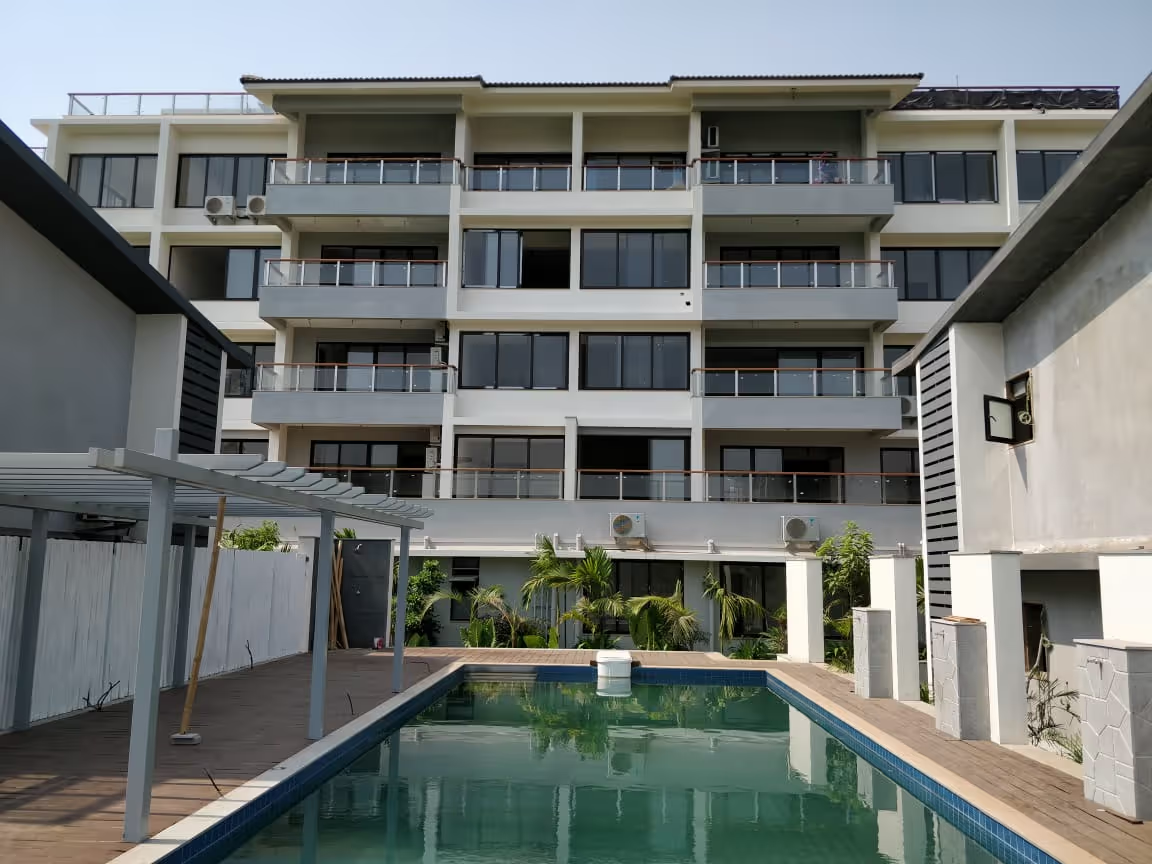
Chrysalis Phase 1 in Nerul has large 3 and 4 BHK apartments with views over the surrounding greenery in Nerul, near Coco Beach. Designed for natural light and openness, these unfurnished residences blend modern architecture with Goa’s calm coastal energy. Every detail, from its location to its layout reflects a new form of refined luxury in Nerul.
Daffodille
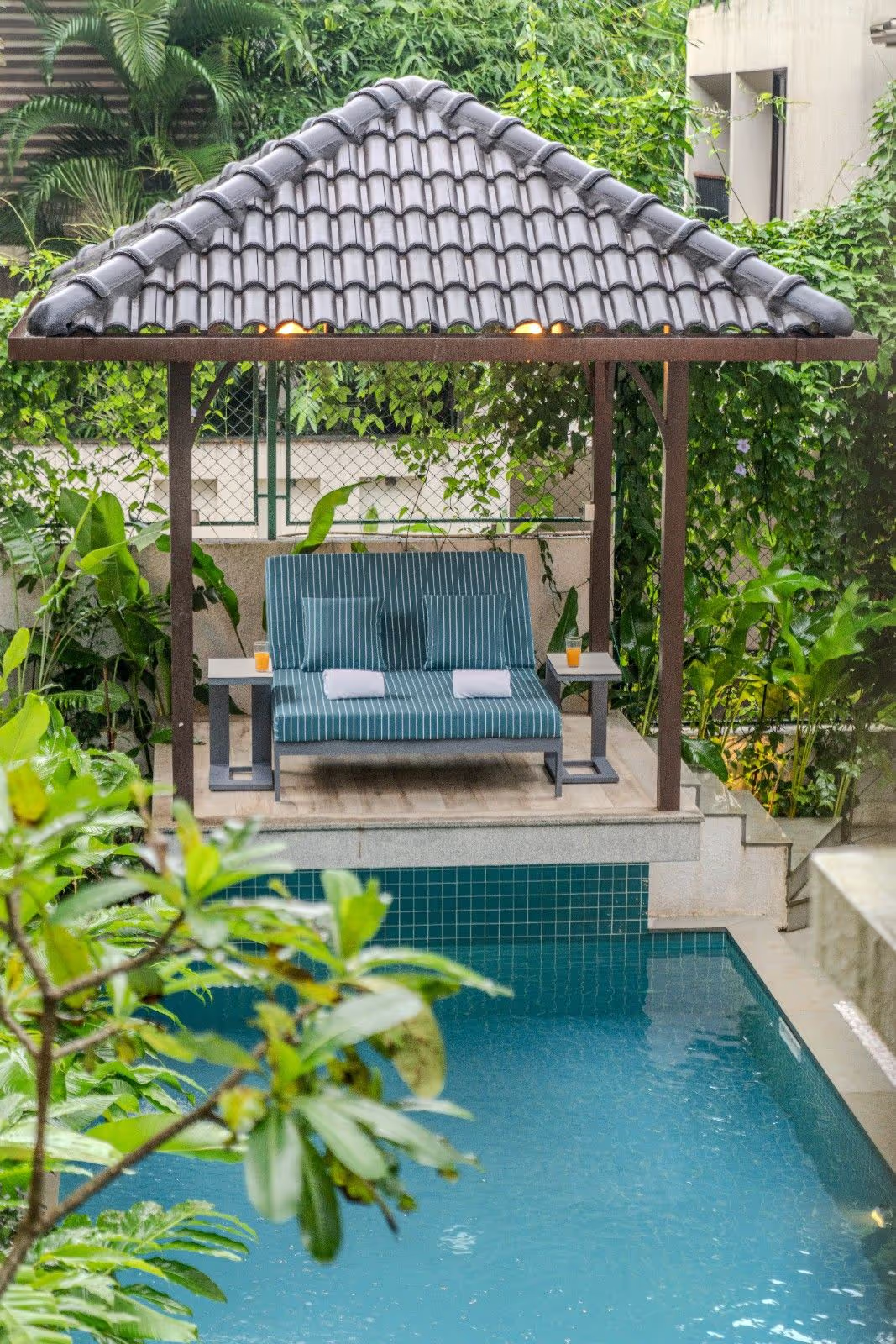
Daffodille is a ready-to-move, furnished complex of studios and 1 BHK apartments in Pilerne, Goa. It runs like a serviced apartment, with reception, housekeeping, and rental management. It suits buyers who want a flat that earns without constant effort. Surrounded by landscaped courts and cascading pools, it is a contemporary sanctuary for those seeking peace close to Candolim Beach.
Run the Checks Yourself
Do not take our word for any of it. Search the RERA ID on the portal. Visit Daffodille. Speak to residents. Ask for the draft agreement and give it to your lawyer. A developer that welcomes these checks is worth considering.
Conclusion
The best way to buy a flat in Goa is to check before you pay.
Start with the legal basics. Verify RERA on the portal. Have your own lawyer check the title, the approvals, and the agreement. Compare carpet area, not headline size. Make sure each payment matches a stage of work.
Then check the flat and the building yourself. Look for damp, test the water, and talk to residents. Add up the full cost, and check the rental rules if you plan to let it out.
Take your time. A careful buyer avoids almost every problem in this guide.
If you want to see flats, you can check against this list and talk to the Ashray team. We will arrange visits to Daffodille and Chrysalis, share the draft agreement, and answer your questions.
This guide is general information, not legal or financial advice. Rules, rates, and fees change. Confirm the details with a qualified Goa property lawyer before you buy.
FAQs
1. What should I check before buying a flat in Goa?
Check RERA registration on rera.goa.gov.in, the title and land records, approvals and clearances, and the carpet area. Read the agreement for sale and the payment plan. Inspect the flat and the building, add up the full cost, and check location and rental rules. Use your own lawyer for the legal checks.
2. How do I verify RERA registration for a flat in Goa?
Get the registration number from the developer. Open the Goa RERA portal at rera.goa.gov.in. Search by number, project name, or developer name. Check the promoter, address, approved plans, and completion date against what you were told. "RERA approved" in an advert is not proof.
3. What is the difference between carpet area and super built-up area?
Carpet area is the usable floor space inside your walls. Super built-up area adds wall thickness, balconies, and a share of common areas such as lifts and lobbies. The gap is usually 20 to 35%. RERA requires developers to state carpet area, so always compare flats by carpet area.
4. Is it better to buy a ready-to-move or under-construction flat in Goa?
A ready-to-move flat lets you see what you buy, avoids delivery risk, and starts giving use or rent at once. An under-construction flat offers more choice of unit and staged payments, but carries delay risk. For first-time buyers, ready-to-move is safer. If you choose under-construction, verify RERA and the developer's record.
5. What extra costs apply when buying a flat in Goa?
Beyond the price, budget for stamp duty, registration fee, and GST on under-construction flats. Add legal fees, any brokerage, the corpus fund, utility connections, and furnishing. Then add ongoing maintenance charges and property tax. Rates change, so confirm current figures with your lawyer. These extras often add a large share to the price.
6. Can NRIs buy a flat in Goa?
Yes. NRIs can buy residential flats in Goa without RBI permission, with no limit on the number of properties. Payments must go through NRE, NRO, or FCNR accounts. NRIs cannot buy agricultural land, plantation property, or farmhouses. A registered Power of Attorney lets a trusted person handle formalities in India.