
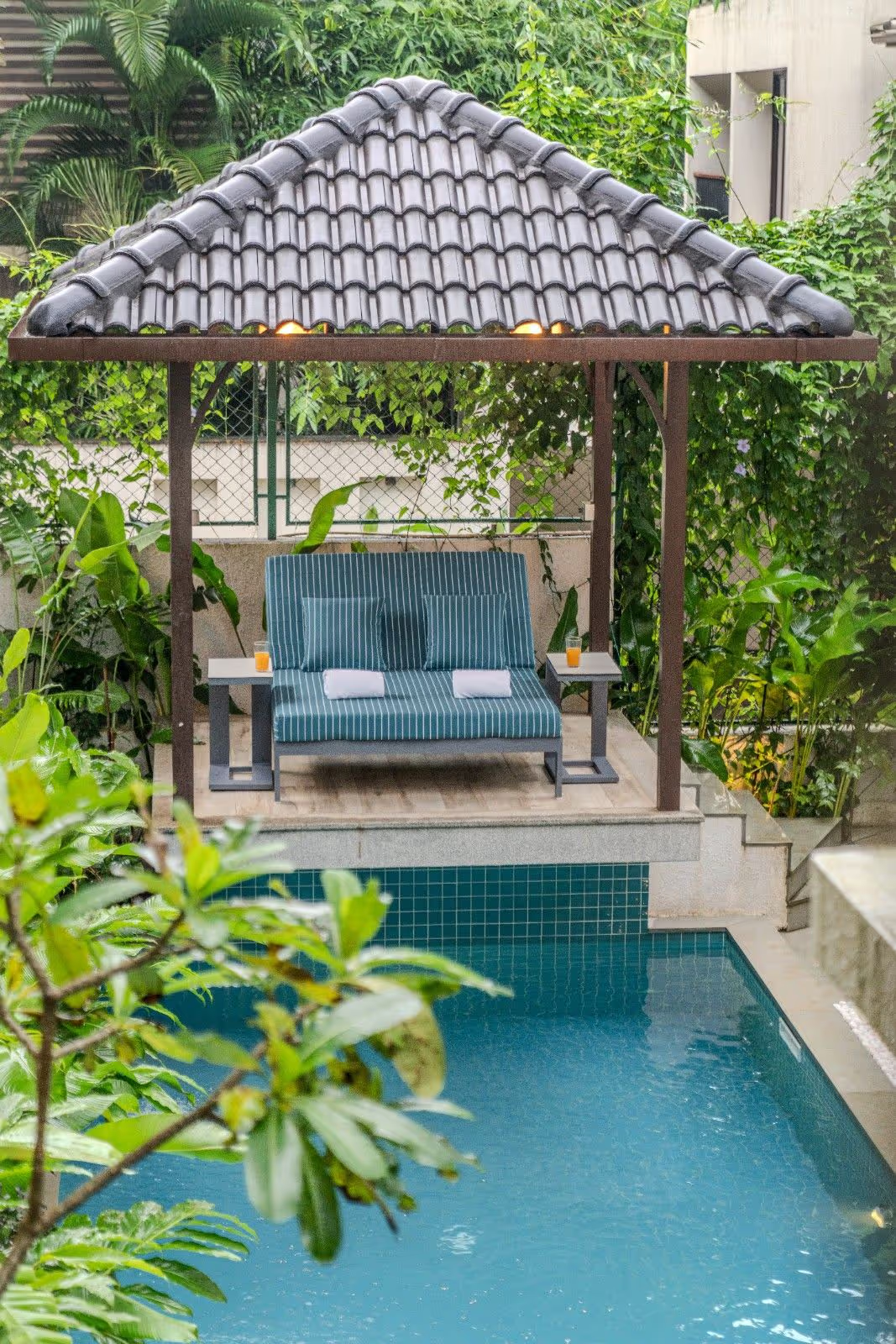








A private pool villa in Goa gives one household its own pool. A shared pool villa (or apartment) uses a community pool that all residents share.
Choose a private pool if you want:
- Full privacy and no pool timings
- A strong rental appeal, since many holiday guests filter for private pools
- A second home you will use often
Choose a shared pool if you want:
- Lower upkeep, because the cost is split among owners
- More amenities, such as a clubhouse, spa, or gym
- A lower-effort home you can lock and leave
The trade-off is simple. A private pool gives you control and privacy but adds work and cost. A shared pool saves effort but costs you privacy and flexibility.
Introduction
A pool changes how you live in Goa. It also changes what you pay, what you maintain, and who you share it with.
Most online guides on villas in Goa with a pool are written for holiday guests. They help you pick a stay for a week. They do not help you decide what to buy.
Buying is different. You own the pool, or a share of it, for years. You carry the upkeep, the legal risk, and the resale effect.
This guide compares private pool vs shared pool villas in Goa from a buyer's side.
What Is a Private Pool Villa?
A private pool villa is a home with its own swimming pool on its own plot. Only the owner, family, and guests use it.
Most villas with a private pool in Goa have three to five bedrooms. The pool sits in a private garden or courtyard. The home may stand alone or sit in a gated community where every villa has its own pool.
What Is a Shared Pool Villa?
A shared pool villa sits in a community with one common pool. All residents use it.
In Goa, a shared pool is more common in apartment complexes and townhouse projects. Gated community villas with a shared pool in Goa are rarer. A few villa communities use a common pool, often with a clubhouse or pool deck.
Private Swimming Pool vs Common Swimming Pool
Other names you may see are "common pool" and "community pool." They mean the same as a shared pool.
Private Pool vs Shared Pool Villa in Goa: Key Differences
Privacy of Villas
Privacy is the biggest difference between the two.
With a private pool, you swim when you like. Nobody watches. You can host a family lunch by the water without booking a time. Children can play without strangers nearby.
With a shared pool, you share the water with neighbors and their guests. Peak hours get busy. Some residents prefer quiet hours. Others bring friends.
Do not assume a private pool is always private. Check these on a site visit:
- Can neighbouring windows see the pool?
- Is the boundary wall high enough?
- Does a road or shared path run close by?
- Do trees or screens give cover?
A pool overlooked by three balconies is private only on paper. Stand at the pool edge and look around before you buy.
Amenities of Villas
A private pool gives you the pool. A shared pool often gives you the pool and a lot more.
Typical extras with a shared pool:
- A pool deck with sunbeds and umbrellas
- A jacuzzi or spa
- A gym
- A clubhouse or lounge
- A café or games room
- Landscaped common grounds
- A reception and concierge
A project can spread the cost of these across many owners. One villa owner could not justify a spa and a gym on a single plot.
What you get with a private pool:
- A pool shaped to your plot
- Your own deck, seating, and shade
- Freedom to choose outdoor furniture and lighting
- A pool that sits right beside your living areas
If you want social facilities and services, shared wins. If you want a private outdoor room, private wins.
Many buyers want both. A gated community of villas, each with its own pool, plus managed grounds and services, comes close to that.
Maintenance Cost of Villas
Both pools need the same care. The difference is who does it and who pays.
What Pool Care Involves
- Cleaning leaves and debris
- Testing and balancing the water
- Running and servicing the pump and filter
- Topping up water
- Repairing tiles, joints, and lights
- Extra care in the monsoon
Who Pays in Each Case
What Drives the Cost
- Pool size. A bigger pool needs more water, chemicals, and power.
- Pool type. An overflow pool needs a stronger pump and a balancing tank. A simple skimmer pool costs less to run.
- Chlorine or salt system. A salt system can reduce handling but needs its own upkeep.
- Who does the work. A part-time pool cleaner or a full facility team changes the monthly bill.
- Climate. Goa's heat, humidity, and salt air increase wear.
For a private pool, ask the seller or an existing owner what upkeep actually costs each month. For a shared pool, read what the maintenance charge covers.
A private pool costs more per owner. A shared pool costs less per owner, but you pay it whether you swim or not.
Ownership Cost of Villas
Maintenance is only one part of the ownership cost. Look at the full picture.
Total Cost of Ownership
Total cost = purchase price + yearly running costs + repair costs, minus any rental income.
A private pool villa often has a higher purchase price and higher running costs. It can also earn more rent. A shared pool home costs less to buy and run but may earn less.
The right choice depends on how you will use the home. A buyer who rents the villa out for much of the year may find a private pool pays for itself. A buyer who visits twice a year may not.
Ownership and Legal Checks: Who Owns the Pool?
This is the part most guides skip.
Private Pool
The pool is part of your property. It sits on your plot and belongs to you. You carry the cost and the legal responsibility for it.
Check these before you buy:
- The pool appears on the approved building plan. A pool is construction. One built without approval can block your Occupancy Certificate and cause trouble at resale.
- Coastal clearance, if the villa is near the sea, a river, or a creek
- The Occupancy Certificate covers the home as built, including the pool
- The water source. Ask if it comes from a borewell, municipal supply, or both, and whether it lasts through April and May
- Insurance. Check that your policy covers the pool and any guests who use it
Shared Pool
The pool is a common area. You own a share of it with all other owners, usually through the housing society or association.
Check these before you buy:
- The pool is in the approved plan and the agreement. Amenities promised to you should be written into your agreement and the project's filings.
- Who maintains it after handover, and for how long
- The maintenance charge and what it covers
- The repair fund. Is there one, and how is it funded?
- The rules. Pool timings, guest limits, and rental restrictions
- The handover to the owners' association. What happens when the developer leaves?
For Both
Use your own independent property lawyer. Verify the project on the RERA portal. In Goa, that is rera.goa.gov.in. Our guide on how to evaluate a real estate developer explains how.
Rental Income: Private Pool Villas for Sale in Goa as an Investment
If you plan to rent the home out, the pool type matters a lot.
Private pool villas appeal strongly to holiday guests. Many guests filter listings for a private pool before they look at anything else. A villa without one may never appear in those searches. Families and groups book the whole villa and use the pool as the centre of the stay.
Villas with shared pool in Goa, and apartments with common pools, appeal to a different group. Couples, solo travellers, remote workers, and long-stay guests often choose them. These guests value the amenities and a lower nightly price.
A private pool villa investment tends to earn more per night. A shared pool home tends to cost less to buy and manage. Our guide on how much you can earn renting a Goa villa covers the details.
If you rent to tourists, check Goa's tourism registration rules. Check any society rules on short stays as well.
Resale: Which Sells Better?
Private pool villas appeal to buyers who want privacy and a second home. The pool is often the first thing they ask for. A well-designed pool in a good village holds appeal.
Shared pool homes appeal to buyers who want amenities and low effort. They are also easier to afford, which keeps the buyer pool wide.
In both cases, clean paperwork and good upkeep matter more than the pool type. A pool in poor repair hurts value. A pool built without approval hurts it more.
Goa Conditions That Affect Both
Goa's climate affects every pool. Plan for these.
- Heat. Pools get heavy use from February to May. Water needs steady treatment.
- Monsoon. Rain dilutes the water chemistry and washes in leaves and soil. A pool needs care even when nobody swims. Do not drain and leave a pool empty. An empty shell can be damaged by groundwater pressure.
- Salt air. It corrodes metal fittings near the coast.
- Humidity. It encourages algae.
- Water supply. Pools need top-ups. Ask how the property gets water in the dry months.
In a shared pool, a facility team handles most of this. With a private pool, you need a reliable caretaker, especially if you live elsewhere.
Which Is Better: Private Pool or Shared Pool?
There is no single winner. It depends on what the home must do for you.
If you cannot decide, ask yourself one question. Do I want my own water or a lower bill? The answer usually settles it.
For help comparing home types, see our villa vs apartment guide for a second home. Our guide to gated community villas in Goa also helps.
Where to Buy Private Pool Villas in North Goa
Location changes both the use and the rental appeal.
Private pool villas in Anjuna. Anjuna is the busiest villa market in Goa. The beach is close, and a resident community keeps the area active through the year. A private pool villa here suits buyers who want rental demand. See our guide to property investment in Anjuna.
Private pool villas in Candolim. Candolim is one of Goa's oldest beach markets, with mature roads and services. Many holiday homes here are apartments with shared pools, so a private pool villa is a rarer find.
Assagao. Quiet, inland, and known for its food and community. Private pool villas here suit buyers who want calm and long-term value.
For a wider view, read our guide to luxury villas for sale in North Goa. You can also browse our full list of private pool villas in Goa.
Ashray wWith Private and Shared Pools Villas in Goa
Ashray builds luxury villas in Goa with swimming pools, plus apartments with shared pools. Here is how they are split.
Conclusion
Private pool vs shared pool villa in Goa comes down to privacy versus effort.
A private pool villa in Goa gives you your own water, your own hours, and strong rental appeal. You pay for upkeep, and you carry the legal and safety duties. A shared pool gives you amenities and a lower bill, but you give up privacy and flexibility.
Choose a private pool for a second home you will use often. It also suits a villa that earns from families and groups. Choose a shared pool if you want low effort, shared amenities, and a lower entry cost.
Whichever you pick, check the same basics. Confirm the pool is in the approved plan. Verify RERA. Ask who maintains it and what that costs. Visit in person, and visit a finished project.
To see both models, talk to the Ashray team. We will arrange a visit to a private pool villa, a shared pool apartment community, or both.
This guide is general information, not legal or financial advice. Confirm legal, insurance, and cost details with a qualified professional before you buy.
FAQs
1. What is the difference between a private pool and a shared pool villa in Goa?
A private pool villa has its own swimming pool on its own plot. Only one household and its guests use it. A shared pool villa or apartment uses a common pool that all residents share. A private pool gives privacy, any-hour access, and rental appeal. A shared pool gives lower upkeep, split costs, and often more amenities.
2. Which is better to buy in Goa, a private pool or a shared pool?
It depends on how you will use the home. A private pool suits second homes you use often, privacy seekers, and rental investors targeting families and groups. A shared pool suits lock-and-leave owners, first-time buyers, and anyone who wants shared amenities and lower effort. Neither is better for everyone.
3. Is a private pool villa more expensive to maintain than a shared pool?
Per owner, yes. With a private pool, you pay for cleaning, chemicals, pump power, repairs, and water yourself. With a shared pool, the cost is split through maintenance charges, and a facility team does the work. Pool size, pool type, and who does the upkeep drive the cost. Ask existing owners what they actually spend.
4. Does a private pool increase rental income in Goa?
It often does. Many holiday guests filter listings for a private pool, and families and groups book whole villas for the pool. Private pool villas tend to earn higher nightly rates than comparable homes without one. Shared pool homes suit couples and long-stay guests at lower rates. Returns also depend on location and management.
5. Who owns a shared pool in a housing community?
A shared pool is a common area. All owners hold a share of it, usually through the housing society or owners' association. The developer or a facility team runs it until the association takes over. Check that the pool is written into your agreement, and ask about the maintenance charge and repair fund.
6. Are there private pool villas for sale in Anjuna?
Yes. Ashray has several in Anjuna. Serenity is a gated community of furnished 4 BHK villas, each with a private pool, ready to move in. Mayberry Phase 1 is a completed community with private pools and 24/7 services. Mayberry Phase 2 offers a private pool and courtyard in each home, due in November 2026.