
.svg)





There's a particular kind of person who has started showing up in Anjuna. They left Bandra, Koramangala, or Indiranagar with impressive careers, good taste, and a growing suspicion that the life they were optimising for wasn't actually the life they wanted. They came to Anjuna for a month. Many never fully left.
This isn't a migration driven by affordability or escapism. It's something more deliberate a conscious reorientation toward a different kind of living. And Anjuna, of all places in India, seems to be where that reorientation is crystallising.
The Rise of the Post-Urban Indian
Something significant is happening in India's urban imagination. After a decade of maximising bigger city, bigger salary, bigger apartment, faster everything a growing cohort of educated, design-conscious Indians is asking a different question: What would it feel like to actually live well?
This is the post-urban Indian. Not someone who has given up ambition, but someone who has renegotiated its terms. They work deeply, not frantically. They want a home that feels like a philosophy, not just a postcode. They are more likely to spend a Saturday morning at a ceramics workshop than in a mall. They follow architects and landscape designers on Instagram more closely than stock tickers.
For this cohort, Goa and Anjuna specifically isn't a vacation destination. It's a reference point. A moodboard. A place that already looks, feels, and moves the way they want their life to.
Why Anjuna Feels Like a Moodboard, Not a Map
Anjuna has always been different from the rest of Goa. Where Calangute and Baga built themselves around tourism infrastructure, Anjuna quietly cultivated something rarer: a distinctive aesthetic identity.
It began with the hippie trail of the 1970s, when Anjuna became India's most famed gathering point for international free spirits, artists, and seekers. That legacy never really left it simply evolved. Today, Anjuna is less about psychedelia and more about intentionality. The village has absorbed decades of design influence, cultural cross-pollination, and creative residency into a visual grammar that feels entirely its own.
Cobbled Lanes & Colonial Architecture
Anjuna's streets wind through Portuguese-era homes in Monteiro Vaddo, their whitewashed facades draped in bougainvillea, their window frames in faded ocean blues and terracotta oranges. It looks like a painting that forgot to stop. This is the backdrop against which Anjuna's newer residents architects, UX designers, writers, brand strategists have built studios, cafes, and homes that honour the heritage while adding their own layer.
Cafes That Are Actually Third Spaces
Cafes in Anjuna serve a social function that Mumbai and Bangalore cafes struggle to replicate. Artjuna in the Vagator-Anjuna lane is perhaps the most famous a multi-level, plant-covered creative sanctuary where regulars bring laptops, hold informal creative sessions, and linger for hours. Eva Cafe offers a quieter counterpart, tucked into the woods with a menu that reads like it was designed by a nutritionist who loves aesthetics. Suha and The Godown add to a cafe ecosystem that functions less as caffeine dispensaries and more as community anchors.
For the post-urban Indian, these spaces represent exactly what they left the city for: environments where slowing down is the point.
Boutiques With a Point of View
Anjuna's boutique culture is another dimension of its moodboard quality. No Nasties, born in Anjuna and now an internationally recognised sustainable fashion brand, embodies the village's environmental consciousness. MV Boutique at Starco Junction and DADAblui's Mermaid Boutique curate bohemian beachwear, handcrafted accessories, and artisanal goods that feel cohesive — part of a visual world, not just products on a rack.
The Wednesday Flea Market, one of India's oldest continuously running markets, is in many ways the original expression of this Anjuna aesthetic an open-air curation of crafts, vintage finds, international design, and live music that has been drawing the design-literate for over 40 years.
Heritage Woven Into Everyday Life
The 17th-century St. Michael's Church anchors Anjuna's spiritual and architectural identity its whitewashed Baroque facade rising above the coastal trees every Sunday morning to the sound of Portuguese-inflected Konkani hymns. A short drive to Assagao Anjuna's quieter, more cultivated neighbour and you find what locals call the "Land of Flowers": wide-canopied lanes, heritage homes converted into galleries, and restaurants like Villa Blanche that feel like visiting a Portuguese grandmother who developed impeccable taste.
This layering of old and new, East and West, heritage and contemporary design is precisely what a moodboard is a collection of references that together articulate a sensibility. Anjuna is that, in living, inhabitable form.
What the Post-Urban Mindset Looks Like, Day to Day
It might help to make this concrete. The post-urban Indian living in Anjuna doesn't look particularly dramatic from the outside. They're not meditating on the beach at sunrise every day (though some do). They're living a life that has texture.
They wake up to light diffused through palm trees rather than an alarm to beat traffic. Breakfast is unhurried — at home, or at a cafe where the waiter remembers their name. Work happens in a few focused hours, either from home or a co-working space; Anjuna has both. Afternoons may involve a swim at a Coco Beach or a drive to the Wednesday Flea Market, a yoga class, or simply nothing. Evenings — perhaps a gathering at someone's villa, a performance at a local art space, or a long dinner at a favourite terrace restaurant.
It isn't leisure. It's a different operating rhythm. And for people who have been running on the city's rhythm for a decade, it feels, initially, almost disorienting. Then it feels right
Introducing Serenity Villas: A Moodboard Come to Life
If Anjuna is a moodboard for a certain kind of life, Serenity Villas by Ashray Developers is what happens when that moodboard becomes architecture.
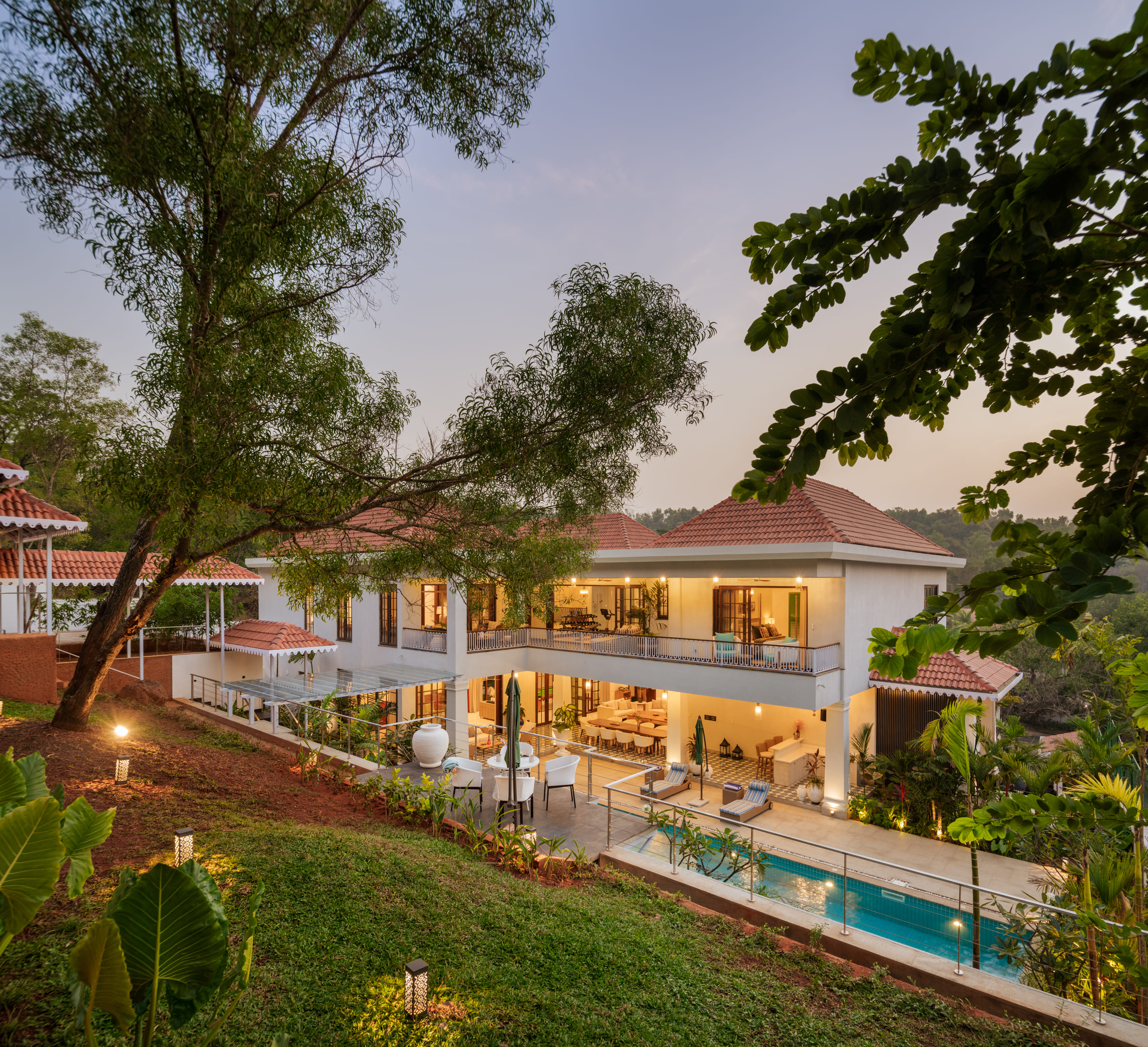
Located in the heart of Anjuna, Serenity is a limited collection of 10 Balinese-inspired luxury villas fully furnished, move-in ready, and designed with the explicit intention of supporting the kind of life this village enables. It is not a gated compound that seals you off from Anjuna. It is a home designed to make you more present to it.
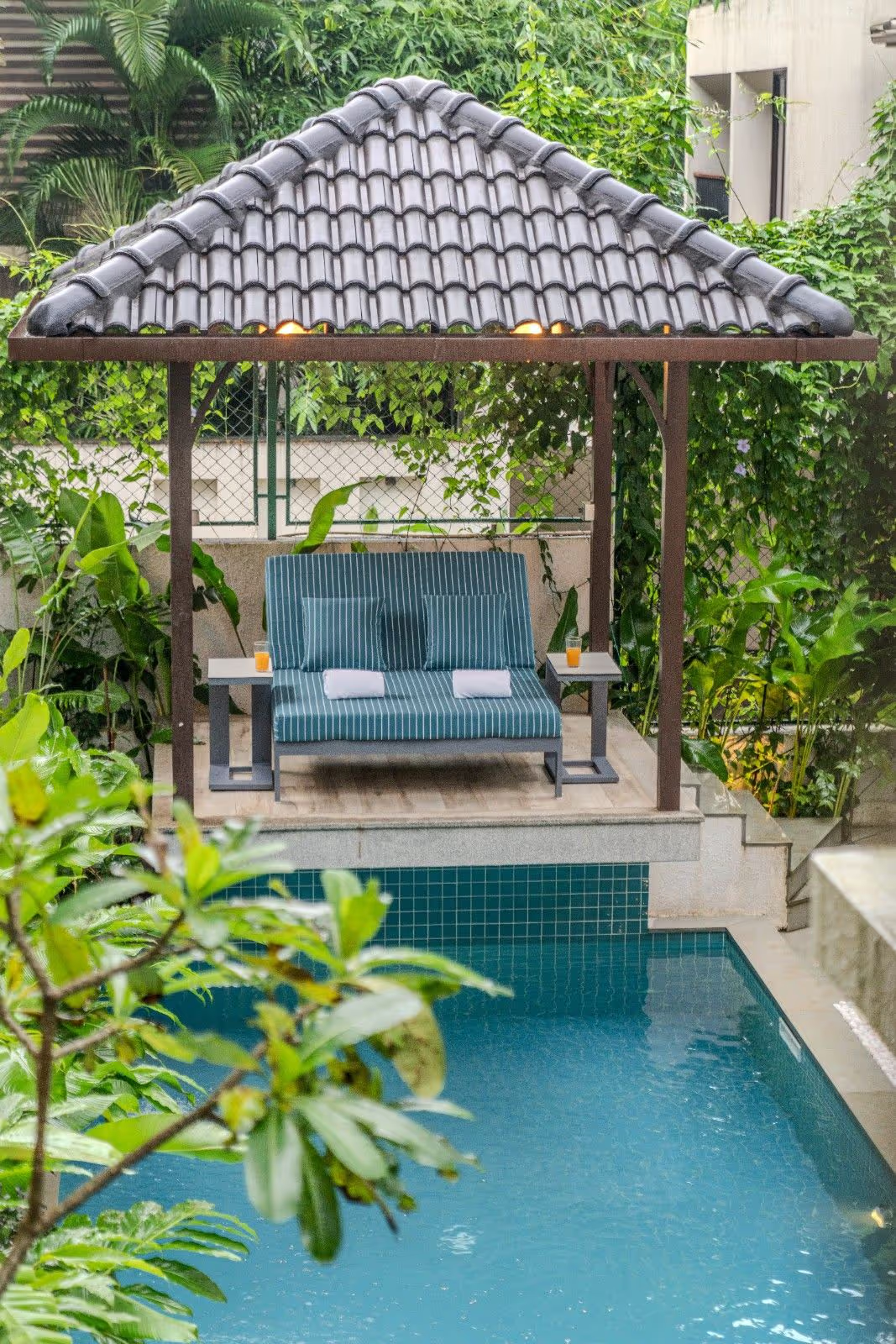
Balinese-Inspired Architecture: A limited collection of 10 tropical villas designed for open, fluid living.
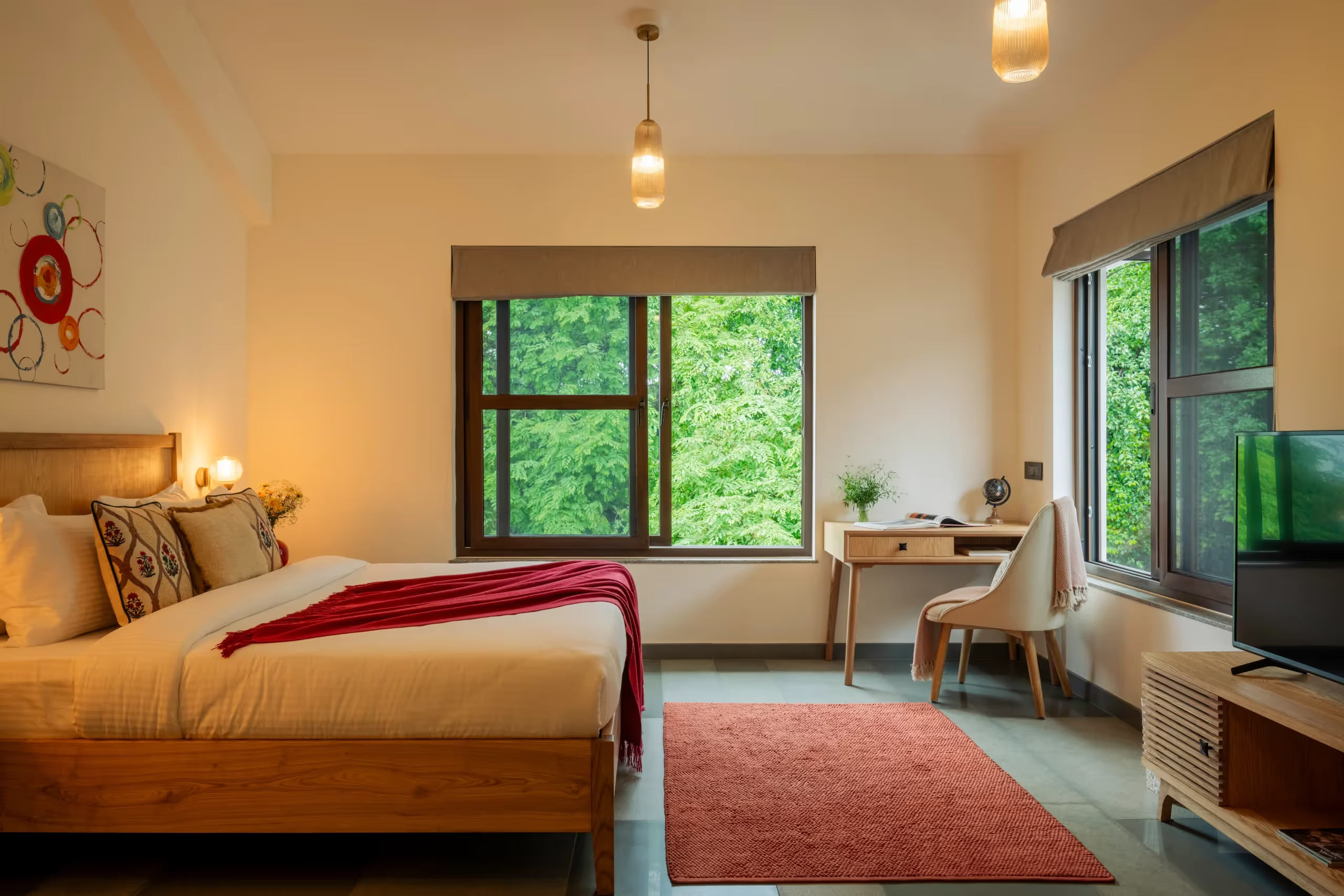
Minimalist Luxury: Each fully furnished villa spans 3,900–4,500 sq. ft., crafted with elegance and intention.
Private Pool: Enjoy your own private pool, designed for quiet retreats and relaxation.
Premium Interiors: Spacious bedroom and dining areas feature high-end fixtures, curated for comfort and sophistication.
Balanced Living: Created to support a lifestyle where calm, clarity, and conscious living take center stage.
A Home with Intention: Serenity Villas reflect the new luxury with less noise, more meaning, and room to simply be.
Why Serenity Is More Than a Home, It’s a Mood
There's a quality that the best spaces in Anjuna share: they make time feel different. An afternoon at Artjuna feels longer in the best way than an afternoon in a Mumbai café. A morning at Coco Beach carries a different psychological weight than a weekend at a city resort.
Serenity Villas is built with that quality as a design intent. Light, materials, spatial rhythm, the relationship between inside and outside all of these are calibrated to create an environment where your nervous system decompresses, your attention sharpens, and everyday rituals become something to look forward to.
Like the best moodboard, it doesn't tell you how to live. It shows you a possibility and makes you want to step into it.
Why Buyers Are Choosing Serenity Villas
- Freehold Ownership: Secure your slice of luxury with full ownership in one of Anjuna’s most sought-after locations.
- High Rental Yield: Strong demand for premium stays ensures excellent rental income and long-term ROI.
- Exclusive Community: Only 10 fully furnished villas, offering privacy, prestige, and peace.
- Move-In Ready: No delays, no uncertainty. These villas are complete and ready for possession.
- Balinese Design Premium: A rare architectural form in Goa that commands a distinctive premium in both resale value and rental pricing
The Quiet Shift That's Already Happening
There's a telling pattern among Serenity's buyers so far: many have visited Anjuna multiple times, stayed in various rental properties across the village, and eventually arrived at the same conclusion, I want to stop renting someone else's version of this life and own my own.
This is the post-urban Indian's real estate decision point. Serenity Villas is simply the right home for that move thoughtfully designed, correctly located, and available at a moment when Anjuna's profile and property values are still moving upward.
With only 10 villas and limited availability, that moment is shorter than it appears.
Explore Serenity Villas, Anjuna, Goa or schedule a private viewing with the Ashray Developers team today.